
Do Consultants Steal Ideas? Addressing Intellectual Property and Trust in Executive Consulting
A Concern Many Business Owners Have
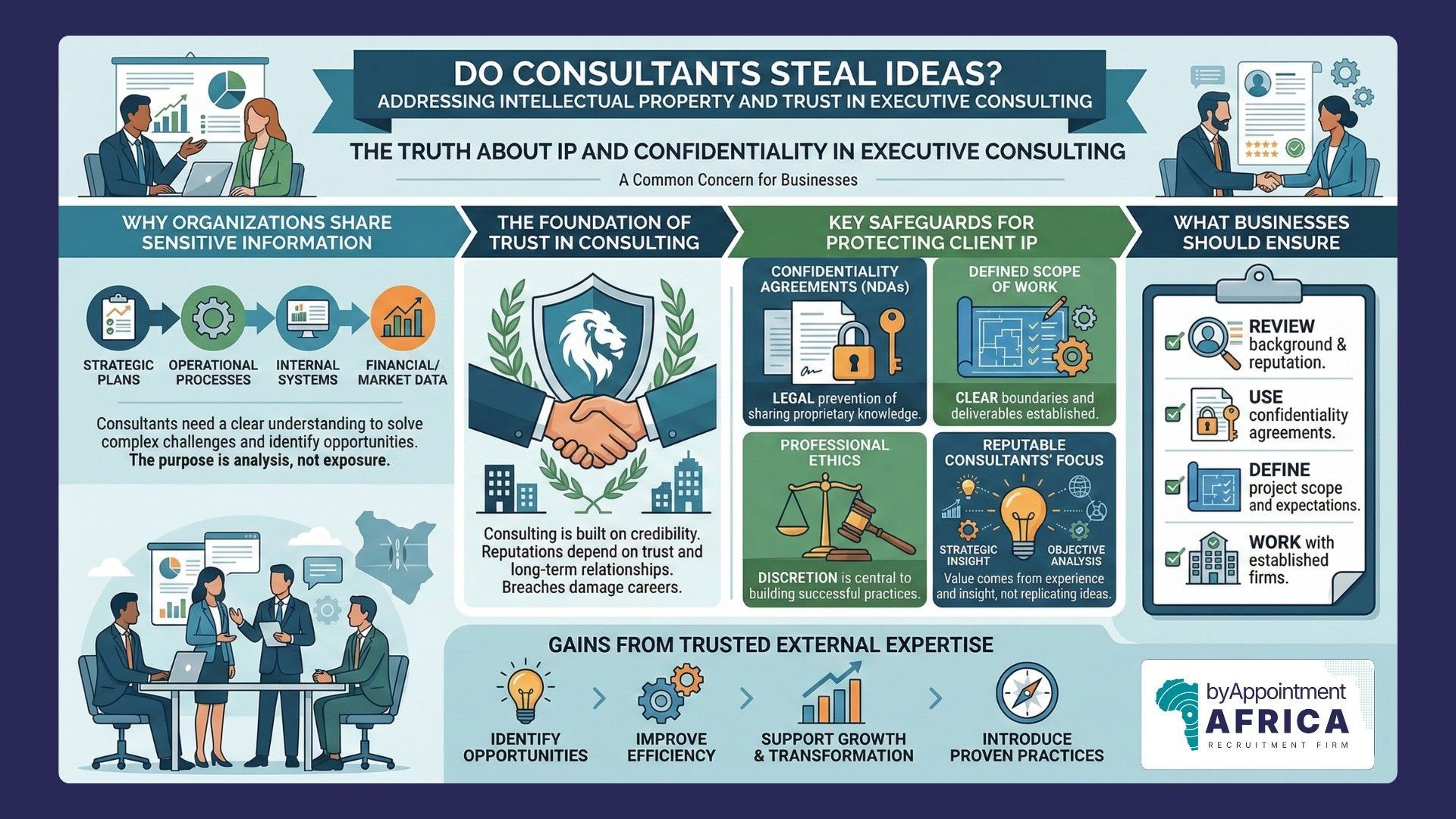
For many business owners and executives in Kenya, bringing in an external consultant can raise an important concern.
If we share our strategy, systems or internal processes, could those ideas be taken elsewhere?
This question is particularly common among founder led companies and growing businesses that have invested years developing their competitive advantage.
While the concern is understandable, the reality of professional consulting is very different. Reputable consultants operate under strict ethical standards, legal agreements and professional reputations that depend entirely on trust.
Understanding how intellectual property and confidentiality are handled in executive consulting can help organisations engage external expertise with confidence.
Why Businesses Share Sensitive Information With Consultants
Consultants are typically brought in to solve complex business challenges. To do this effectively, they need a clear understanding of the organisation.
This often involves reviewing areas such as:
- Strategic plans
- Operational processes
- Internal systems and workflows
- Leadership structures
- Financial or market data
Without this level of transparency, it is difficult for consultants to provide meaningful guidance.
The purpose of sharing this information is not exposure. It is to allow experienced professionals to analyse the situation, identify opportunities and recommend improvements that strengthen the organisation.
The Role of Trust in Executive Consulting

Consulting is a relationship built on credibility.
Experienced consultants rely heavily on their professional reputation and long term client relationships. Any breach of confidentiality would damage their standing in the market and quickly end their career in the industry.
For this reason, professional consultants treat client information with the highest level of discretion.
Trust is not simply expected. It is reinforced through clear agreements, structured processes and professional standards that govern the consulting engagement.
How Intellectual Property Is Protected in Consulting Engagements
Most executive consulting engagements include several safeguards designed to protect the client’s intellectual property.
These typically include:
Confidentiality Agreements
Non disclosure agreements ensure that any sensitive information shared during the consulting engagement remains confidential.
These agreements legally prevent consultants from sharing proprietary knowledge with external parties.
Clearly Defined Scope of Work
A structured project agreement outlines what the consultant is responsible for delivering.
This clarity protects both the organisation and the consultant by establishing clear expectations and boundaries.
Professional Ethics
Consultants who work with executive teams understand that confidentiality is central to their profession.
Maintaining discretion is essential for building long term client relationships and sustaining a successful consulting practice.
Why Reputable Consultants Protect Client Ideas

Professional consultants do not succeed by taking ideas from one organisation to another.
Their value comes from experience, strategic insight and the ability to analyse business challenges objectively.
What consultants typically bring to organisations includes:
- Experience across multiple industries
- Structured problem solving approaches
- Exposure to different leadership strategies
- Best practices gathered from previous projects
The goal is to help each organisation improve its own strategy and operations, not to replicate internal systems elsewhere.
When Businesses Should Be Careful
While the majority of professional consultants operate ethically, organisations should still take steps to ensure they are working with trusted partners.
Before engaging a consultant, businesses should:
- Review the consultant’s professional background and reputation
- Ensure confidentiality agreements are in place
- Clearly define project scope and expectations
- Work with established consultancy firms where possible
These steps help ensure that the consulting relationship is transparent, secure and beneficial for both parties.
The Importance of Choosing the Right Consultancy Partner

The most effective way to reduce risk is to work with consultants who have a strong professional reputation and a structured approach to engagements.
Established consultancy firms typically follow rigorous processes when selecting and vetting consultants. This ensures that organisations are connected with professionals who understand both the strategic and ethical responsibilities of executive consulting.
A strong consultancy partner focuses not only on solving business challenges but also on building long term trust with clients.
What Businesses Gain From Trusted Consultants
When organisations feel confident sharing information with consultants, the results can be significant.
Experienced consultants can help businesses:
- Identify strategic opportunities
- Improve operational efficiency
- Strengthen leadership decision making
- Introduce proven industry practices
- Support organisational growth and transformation
Because consultants bring an external perspective, they often see challenges and opportunities that internal teams may overlook.
Final thoughts
The idea that consultants might steal business ideas is one of the most common misconceptions about the consulting profession.
In reality, professional consulting is built on trust, confidentiality and long term reputation. Consultants succeed by helping organisations solve problems and achieve results, not by misusing proprietary information.
For businesses in Kenya, working with experienced and reputable consultants can provide valuable insight, strengthen strategy and accelerate growth.
The key is choosing the right consultancy partner and establishing clear agreements that protect both the organisation and the consultant.
Looking for trusted expertise to support your organisation?
By Appointment Africa connects businesses with highly qualified consultants and senior professionals who bring experience, discretion and strategic insight.
Contact the team to learn how the right consultant can help your organisation move forward with confidence.
Frequently Asked Questions
Do consultants legally own the ideas they create for a business?
In most consulting engagements, any work produced for the client becomes the property of the organisation. Contracts typically define ownership clearly to ensure that intellectual property remains with the business.
How do companies protect confidential information when hiring consultants?
Businesses usually implement confidentiality agreements, limit access to sensitive data and clearly define the consultant’s role and responsibilities.
Is it safe to share company strategy with consultants?
When working with reputable consultants under proper agreements, sharing strategic information is common practice and necessary for effective consulting.